The best things to do in Nice are mostly free: walk the Promenade des Anglais, get lost in the Old Town, climb Castle Hill for the view over the Baie des Anges, and swim from the pebble beaches. Add the Matisse and Chagall museums, a socca on the Cours Saleya and a 20-minute train ride to Monaco, and you have three or four full days. The tram from the airport reaches the city centre in under 30 minutes, so you can be on the seafront an hour after landing.
Nice only became French in 1860, and its Italian past still shows in the ochre façades, the baroque churches and a cooking style built on chickpeas and olive oil. It is also the ideal base for the Riviera: Monaco, Èze, Antibes and Cannes are all reachable by train or bus.
Nice at a glance
| What | Key facts (checked November 2026) |
|---|---|
| Airport to city centre | Tram line 2, under 30 minutes to Jean Médecin. “Aéro” return ticket: €10. |
| Single tram or bus ticket | €1.70, with transfers allowed for 74 minutes. One-day pass: €7. |
| Musée Matisse | €10. Closed on Tuesdays. Free for under-18s and students. |
| Municipal museums pass | “Pass 10 Musées”: €15 for 4 days. |
| Musée national Marc Chagall | €10 (€12 during exhibitions). Closed on Tuesdays. Free for everyone on the first Sunday of the month. |
| Train to Monaco | TER regional train, about 20-25 minutes, several trains an hour in the daytime. |
| Nice Carnival 2027 | 9-28 February 2027, theme “Vive l’Amour”. |
| Unesco | “Nice, Winter Resort Town of the Riviera”, listed in 2021. |
The Promenade des Anglais and the seafront
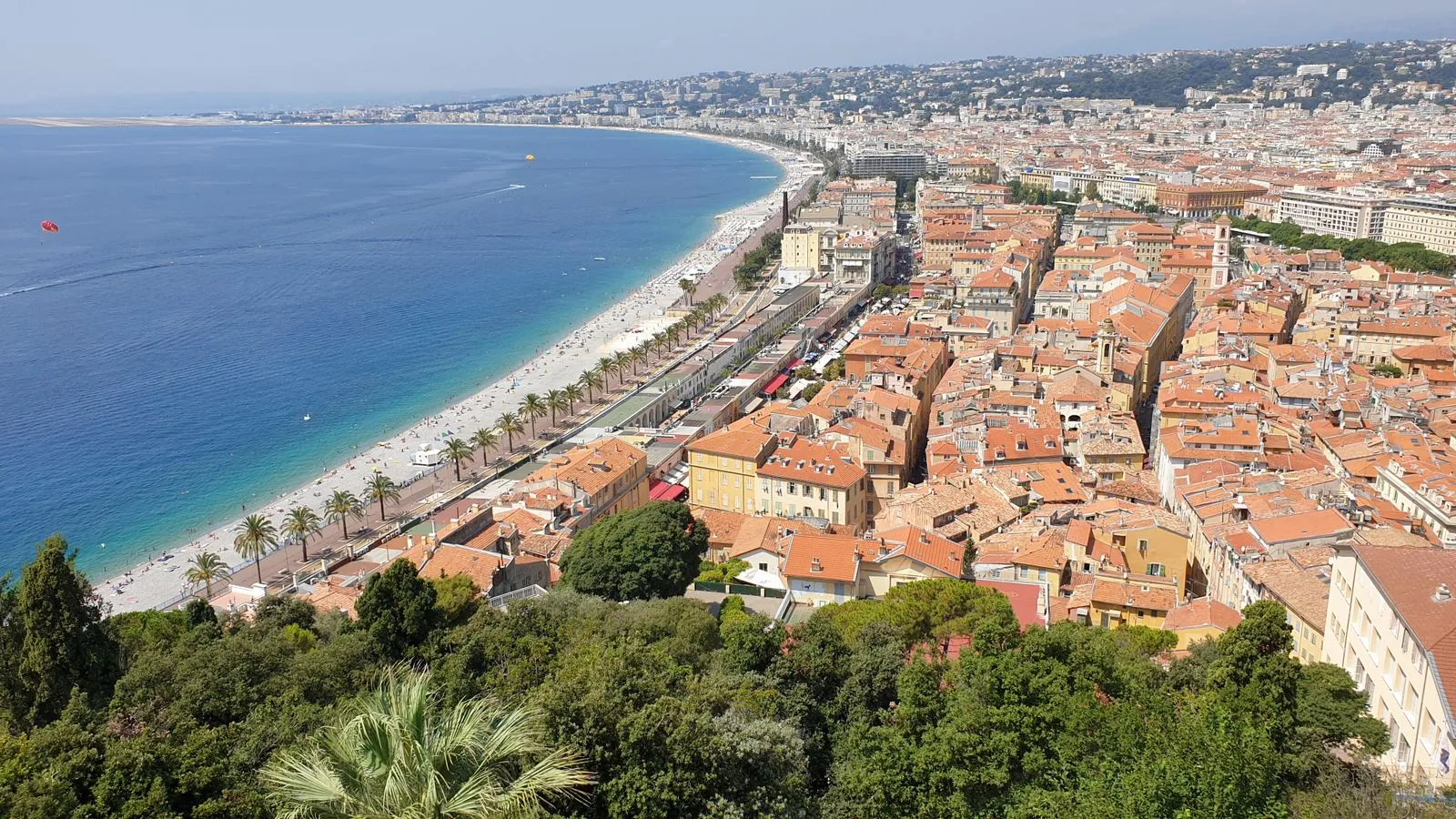
If Nice had a spine, this would be it. The Promenade des Anglais runs for about 7 km along the Baie des Anges, lined with palm trees and facing open sea. It takes its name from the British who wintered in Nice in the early 19th century and paid for a path along the shore.
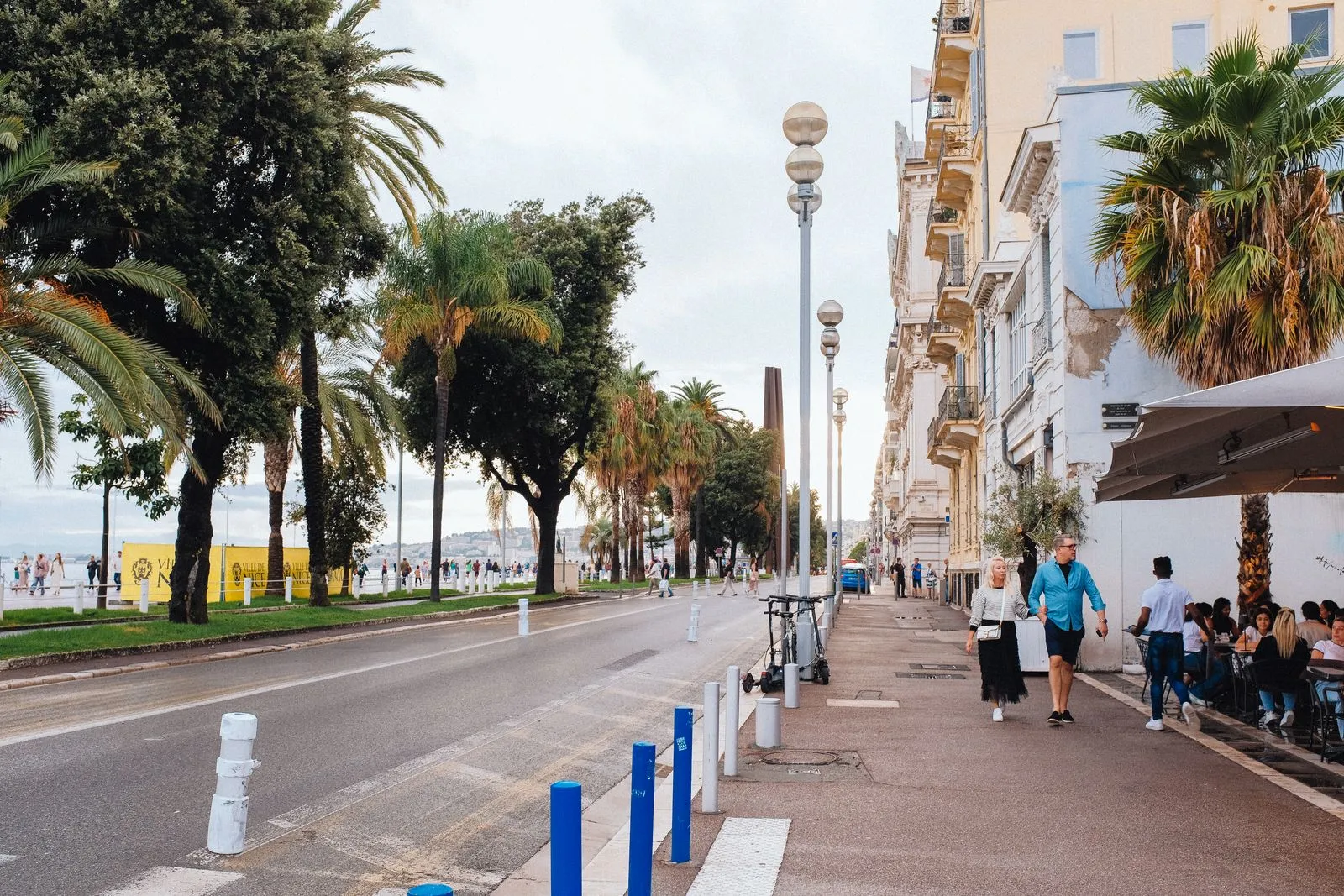
That winter-resort heritage is now recognised by Unesco. In 2021, “Nice, Winter Resort Town of the Riviera” joined the World Heritage List, covering the Promenade, the Belle Époque villas and hotels, the Russian Orthodox cathedral and the hillside villas of wealthy winter visitors (1760-1939).
Today the “Prom'” is the city’s open-air living room. The ritual is to sit on one of the blue chairs, the folding seats that have become a symbol of Nice, and watch the waves.
Towards the eastern end, about 20 minutes’ walk from the Old Town, stands the Negresco, with its pink dome and white Belle Époque façade, facing the sea since 1913. Closer to the Old Town, the Jardin Albert Ier, one of Nice’s oldest gardens, makes a shady transition between the seafront and the historic centre.
The beaches: pebbles, not sand
Nice’s beaches surprise many first-time visitors: they are made of smooth grey pebbles, not sand. Bring water shoes and a thicker towel. The upside is clear water. Public beaches are free and alternate with private beach clubs, where you rent a sunbed and parasol for the day and can order lunch. In July and August, arrive early for a spot on the public beaches near the Old Town.
Vieux Nice, the Old Town
Past the Jardin Albert Ier, the city changes completely. Vieux Nice is a maze of narrow, shady lanes laid out without any obvious logic, where the sun only reaches the ground at midday. Tall façades in ochre and Pompeian red stand close together, and washing still hangs between the windows.
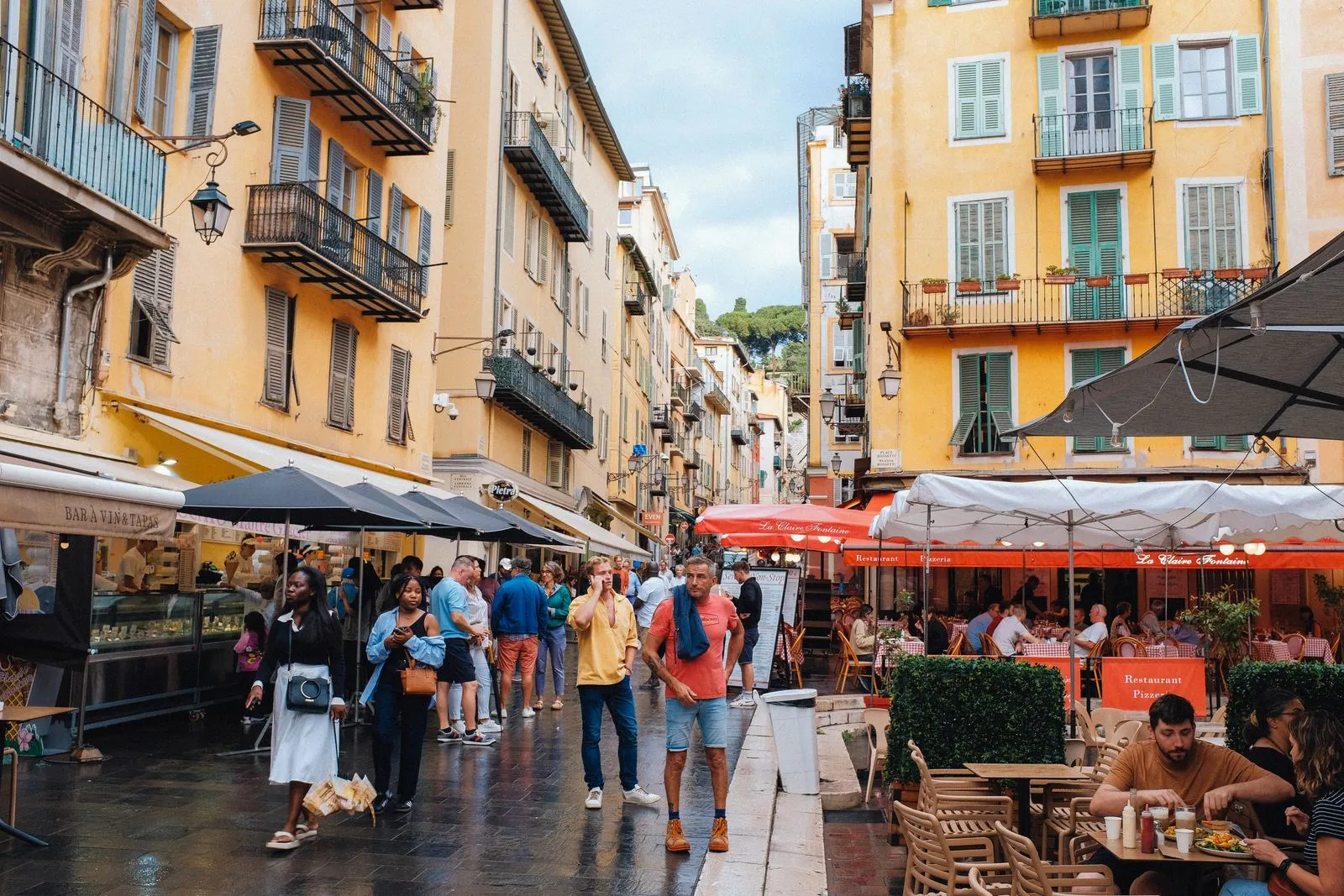
At the heart of the maze is Place Rossetti, probably the prettiest square in Nice, with its fountain and café terraces. This is where Fenocchio, the local ice-cream institution, has its original shop, with flavours from lavender to tomato-basil.
The square is overlooked by Sainte-Réparate Cathedral, with its baroque façade and dome of glazed tiles.
What stays with you is the street life: craft shops, grocers smelling of olive oil and herbs, stalls selling hot socca, wine bars in vaulted cellars. Come by day for history and food, and come back in the evening: a large share of the city’s bars and restaurants are here.
Cours Saleya and the food of Nice
The Cours Saleya, a long esplanade lined with pastel façades on the edge of the Old Town, is the city’s larder. Every morning except Monday, it becomes a flower and produce market. On Mondays, antiques and second-hand dealers take over.
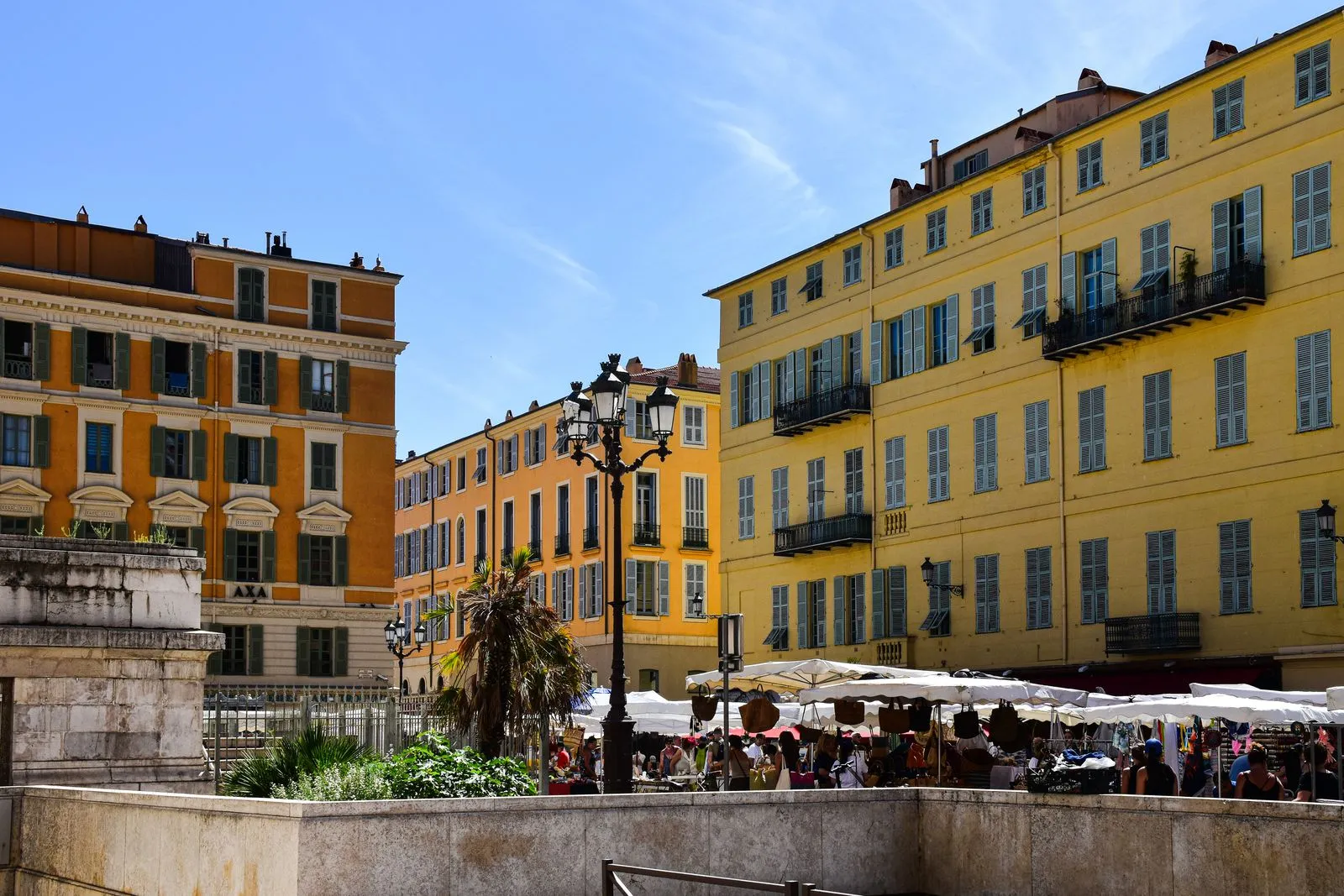
It is also the best place to discover Niçois cooking, a simple, hearty food with its own codes, with a stronger Italian imprint than the rest of Provence. What to try:
- Socca: the star. A large, thin pancake of chickpea flour, water and olive oil, baked in a wood-fired oven on a huge copper tray. Eat it hot, with black pepper, standing up.
- Salade niçoise: the traditional version has no cooked potatoes or green beans, but raw vegetables, hard-boiled eggs, anchovies or tuna, small black Nice olives and olive oil.
- Pan bagnat: literally “wet bread”, a niçoise salad in a round bun rubbed with olive oil. Perfect for a beach lunch.
- Pissaladière: a soft bread-dough tart topped with slow-cooked onions, anchovies and black olives.
- Tourte de blettes: a Swiss chard pie, served as a dessert with pine nuts, raisins and icing sugar.
- Petits farcis and courgette flower fritters: stuffed baked vegetables, and light, crisp fritters in season.
Practical points: restaurants usually serve lunch from about 12pm to 2pm and dinner from 7pm. Service is included in the bill; leaving a few euros for good service is a kind gesture, not an obligation. Contactless card payment is accepted almost everywhere, though a few small stalls prefer cash.
Castle Hill (Colline du Château)
At the eastern end of the Old Town, a green hill separates the historic centre from the port. Its citadel was dismantled on the orders of Louis XIV in the early 18th century, leaving only a few ruins. Climb the stairs, or take the free lift near the seafront (Quai des États-Unis, at the corner of Rue des Ponchettes), which is sometimes closed for maintenance or in bad weather.
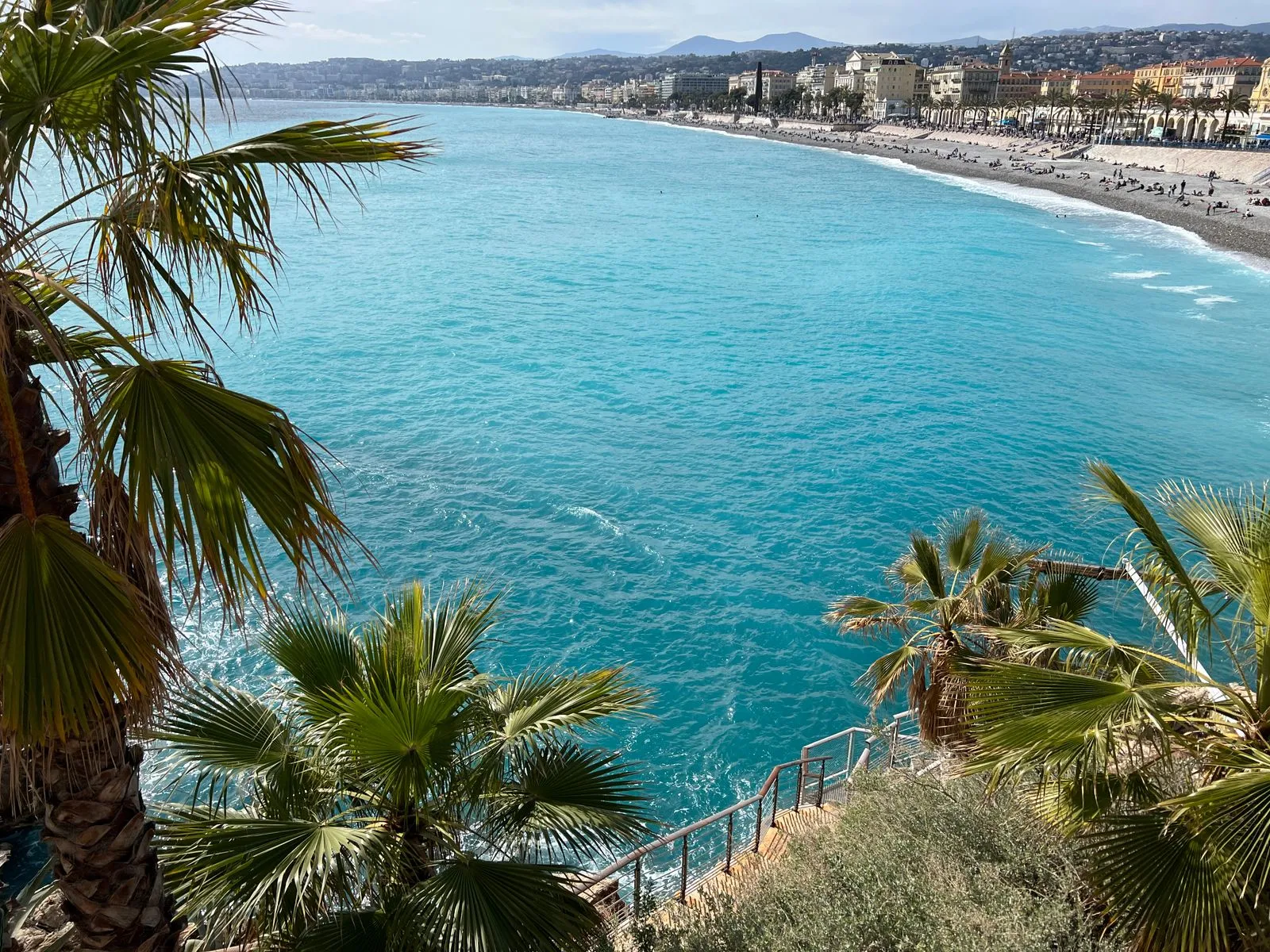
On one side, you see the whole curve of the Baie des Anges, the Promenade stretching away and the red-tiled roofs of the Old Town below. On the other, Port Lympia and its colourful boats. At the top, the park has shady paths, play areas and a huge artificial waterfall, as well as the Château cemetery. The park opens at 8.30am and closes at 8pm from April to September and at 6pm from October to March.
Cimiez: Matisse, Chagall and the Romans
On the heights above the centre, Cimiez is one of the smartest districts of Nice, lined with villas and former palace hotels from the time when European aristocrats, and Queen Victoria herself, came to winter here. Take a bus up from the centre; it is a steep walk.
The Musée Matisse, in a red Genoese villa, holds one of the world’s major Matisse collections: paintings, drawings, paper cut-outs and personal objects. Matisse lived in Nice for decades and is buried in the nearby Cimiez cemetery. Nearby, the Musée national Marc Chagall holds the largest public collection of Chagall’s work, centred on his Biblical Message cycle, with stained glass and a mosaic.
Before it was Nice, this was Cemenelum, a Roman town and capital of the province of the Maritime Alps. You can still see an amphitheatre and the ruins of the public baths, with an archaeology museum alongside.
Nice museums: prices and closing days
Nice’s museums are split between the city’s own (municipal) museums and the national Chagall museum, with different tickets and rules.
| Museum | Price | Closed |
|---|---|---|
| Musée Matisse (municipal) | €10 | Tuesdays; 1 January, Easter Sunday, 1 May, 25 December |
| Pass 10 Musées (municipal museums) | €15, valid 4 days | Each museum keeps its own closing day |
| Musée national Marc Chagall | €10, €12 during temporary exhibitions; free for everyone on the first Sunday of the month | Tuesdays; 1 January, 1 May, 25 December |
| MAMAC (modern and contemporary art) | – | Closed for renovation, reopening not expected before 2028 |
The municipal museums are free for under-18s and for students, on proof of status. The Chagall museum is free for EU residents under 26, which does not include British or American visitors. The Matisse museum is open 10am-5pm in winter and 10am-6pm from April to October. The Chagall museum closes for lunch (1pm-2.30pm) and at 5pm in winter. The municipal pass does not cover the Chagall museum.
The port, Place Masséna and the Promenade du Paillon
Behind Castle Hill lies Port Lympia, where fishing boats, yachts and ferries to Corsica sit side by side, with tall red and yellow façades, fish restaurants and a more local feel. Above it, the wooded Mont Boron has walking trails and views over the bay.
In the centre, Place Masséna is the hub of Nice: a vast checkerboard square framed by arcaded buildings in Pompeian red. From here, the Promenade du Paillon, a long park built over the old riverbed, runs with fountains, lawns and water mirrors that cool the city in summer. Between Place Masséna and the sea lies the Carré d’Or, the most elegant shopping district.
When to visit Nice
- Spring (April to June): probably the best time. Pleasant temperatures, flowers, beautiful light and no summer crowds yet.
- Autumn (September and October): similar conditions, with the sea still warm. Many regulars think September is the best month of all.
- Summer (July and August): high season. Warm sea and nightlife, but crowded beaches, heat and the highest prices. Book well ahead.
- Winter (November to March): surprisingly sunny and mild, with quiet museums and the Promenade in winter sun.
The Nice Carnival in February
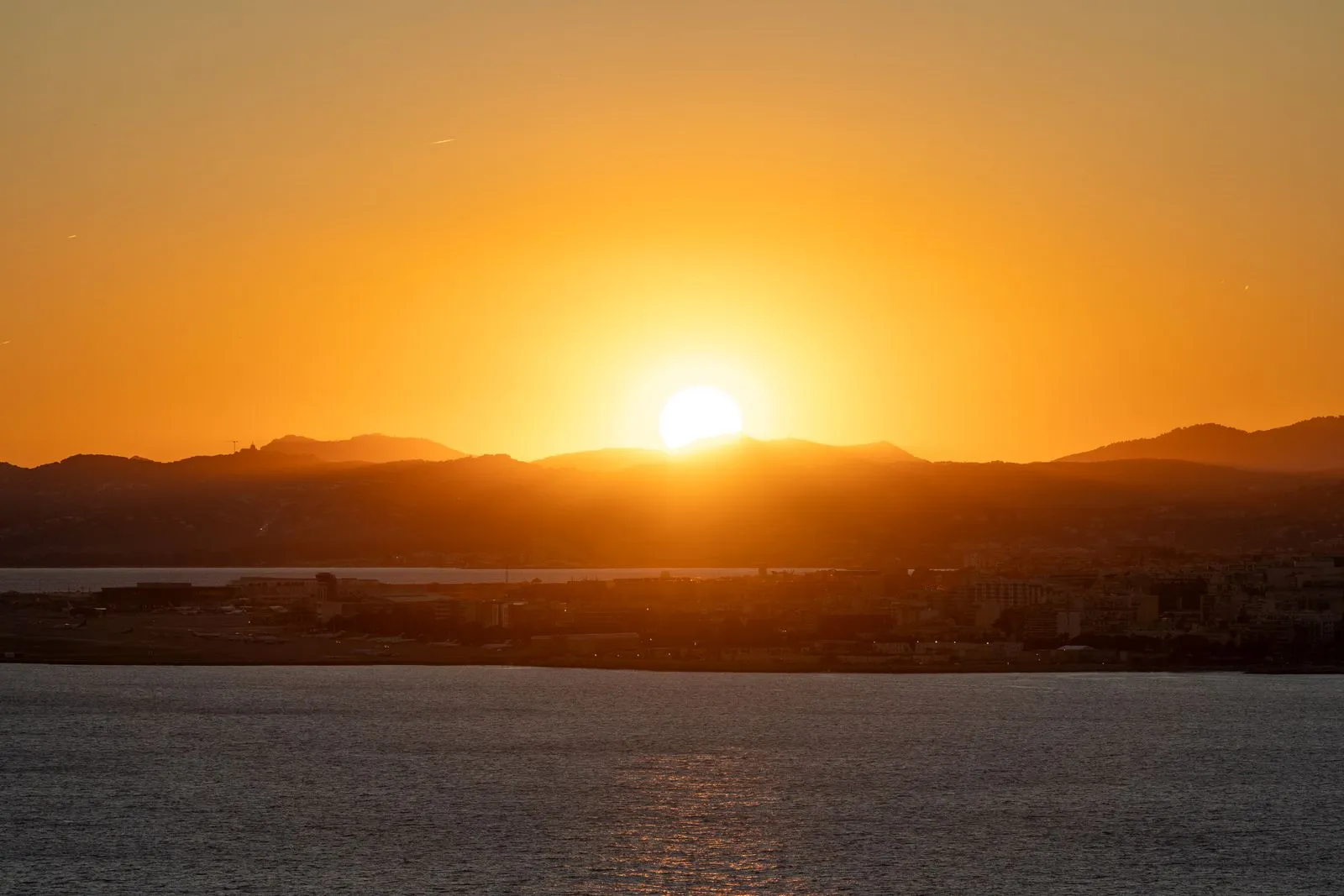
The Carnival is one of the oldest and largest in the world. For almost three weeks, the city lives to the rhythm of the parades: illuminated corsos with huge satirical floats built around a yearly theme, and the “batailles de fleurs”, flower battles where performers on decorated floats throw thousands of fresh flowers into the crowd. The 2027 Carnival runs from 9 to 28 February 2027 on the theme “Vive l’Amour”. Seats in the stands are ticketed; buy them from the official carnival website.
Where to stay in Nice
- Vieux Nice for atmosphere, close to the restaurants and nightlife, but it can be noisy at night.
- Carré d’Or and Quartier des Musiciens for comfort and a central location, within walking distance of the sea and the Old Town.
- The seafront for the view over the Baie des Anges, usually the most expensive choice.
- The port for a more local feel and quieter evenings.
- Cimiez for calm and the museums.
Getting to Nice and getting around
Flights from the UK and the US
Nice Côte d’Azur is France’s busiest airport outside Paris. The airport lists direct flights to London and to eight other UK cities: Birmingham, Bristol, Manchester, Liverpool, Leeds Bradford, Newcastle, Edinburgh and Belfast. London has flights all year; many of the regional routes run in summer only, so check the airline timetables for a winter trip. The flight from London takes about 2 hours.
From the United States, La Compagnie, an all-business-class airline, flies Newark-Nice and is running the route through the winter for the first time in 2026-27, twice a week. In summer, Delta flies direct from New York JFK and United from Newark, and American Airlines flies from Philadelphia; American adds a daily New York JFK-Nice flight from 6 May 2027. Out of season, most Americans connect through Paris or another European hub.
By train
From London, take the Eurostar to Paris Gare du Nord, cross the city to Gare de Lyon, then a TGV to Nice-Ville. The TGV alone takes about 6 hours, so allow 10-11 hours from London, with lovely coastal views on the last stretch after Marseille. Book on SNCF Connect. Once there, regional TER trains run along the coast from Cannes to Menton and on to Ventimiglia in Italy.
From the airport: tram line 2
Tram line 2 stops at both terminals (T1 and T2) and reaches the city centre (Jean Médecin) in under 30 minutes, then continues to Port Lympia. Trams run about every 7-8 minutes on weekdays. The airport fare is the “Aéro” return ticket at €10, with the return trip open-dated. Buy it from the machines at the tram stops (coins and bank cards) or at the airport’s ticket desks. Paper tickets have been replaced by a rechargeable card, so keep it for the rest of your stay.
In the city
Lignes d’Azur runs three tram lines and the buses. A single journey costs €1.70, with transfers allowed for 74 minutes, and a one-day pass costs €7. Validate your card each time you board. The centre is compact and best explored on foot, and parking is notoriously difficult: you do not need a car in Nice.
Entering France
The EU Entry/Exit System (EES), rolled out from October 2025 and fully in place since 10 April 2026, records the fingerprints and photo of UK and US passport holders on their first entry, so allow extra time (Eurostar passengers do this at St Pancras before departure). ETIAS, a separate online travel authorisation, is not in operation yet: check the official EU travel website before you book.
Book tours and activities in Nice
Many activities are best booked ahead: the hop-on hop-off bus, trips to Monaco, Èze or Antibes, museum tickets or a stadium tour of the Allianz Riviera. Here is a selection of tours and tickets in Nice and along the coast (partner links):
Réservez vos visites à Nice
Aquasplash : Billet d'entrée
Villa Ephrussi de Rothschild: Billet d'entrée
Nice Le Grand Tour: Bus Hop-on Hop-off
Stade Allianz Riviera & Musée National du Sport : visite guidée
Musée des illusions de Nice : Billet d'entrée
Nice : 1 heure de visite guidée en Segway
Day trips from Nice
A short train or bus ride takes you to hilltop villages, famous resorts and some of the finest coastline in France:
- Villefranche-sur-Mer: under 10 minutes by TER. A small town around one of the deepest natural harbours on the coast, and a beach right by the station.
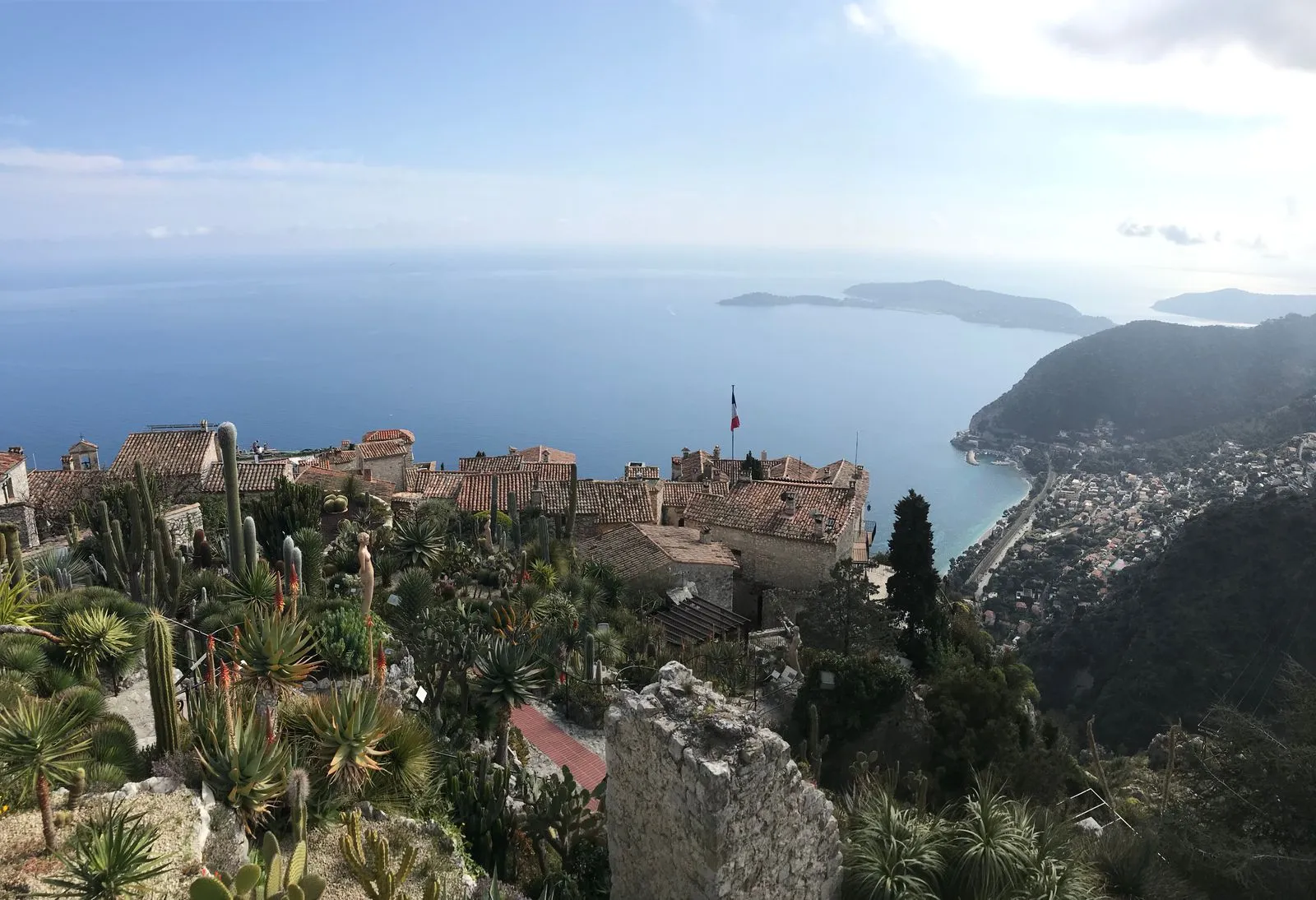
- Èze: a medieval village perched on a rock 400 m above the sea, with cobbled lanes and an exotic garden with dizzying views. A Lignes d’Azur bus climbs from Nice to the village. Fit walkers can take the TER to Èze-sur-Mer and hike up the steep Nietzsche path (allow about an hour, more in the heat).
- Monaco: about 20-25 minutes by TER, with several trains an hour in the daytime. See the Prince’s Palace, the casino and the Oceanographic Museum. Buy your ticket before boarding and keep an eye on your bags on crowded trains. Until 11 December 2026, engineering works stop trains between Nice and Monaco from 10pm to 6am, Sunday to Thursday nights, with replacement coaches; after that, check the TER timetable for evening works before you go. In early June, the Grand Prix fills the Principality.
- Menton: at the Italian border, known for its mild climate, citrus gardens, colourful old town and Lemon Festival in February.
- Antibes: between Nice and Cannes, with ramparts by the sea, a Provençal market and the Picasso Museum in the Château Grimaldi.
- Cannes: under an hour by TER, for the Croisette and boat trips to the Lérins Islands.
- Saint-Paul-de-Vence and the backcountry: the fortified village of Saint-Paul is a hub of modern art, with the Fondation Maeght just outside the walls. Further north, the Chemins de fer de Provence “Train des Pignes” climbs the Var valley through the mountains towards Digne-les-Bains; while the upper line is being repaired, trains run as far as Saint-André-les-Alpes, with a coach for the last stretch. In summer, a heritage steam train runs between Puget-Théniers and Annot.
Frequently asked questions
How do I get from Nice airport to the city centre?
Take tram line 2 from Terminal 1 or 2. It reaches Jean Médecin in the centre in under 30 minutes, and continues to the port. The “Aéro” return ticket costs €10.
How many days do you need in Nice?
Two full days cover the Promenade, the Old Town, Castle Hill and Cimiez. With four or five days, add Monaco, Èze or Antibes.
Are Nice museums free?
Not for adults, but they are affordable. The Musée Matisse costs €10 and the “Pass 10 Musées” €15 for four days across the municipal museums. Under-18s and students get in free at municipal museums. The national Chagall museum is free for everyone on the first Sunday of each month.
Are the beaches in Nice sandy?
No, they are pebble beaches. Bring water shoes. Public beaches are free; private beach clubs rent sunbeds by the day.
Can you do a day trip from Nice to Monaco by train?
Yes. TER trains from Nice-Ville reach Monaco in about 20-25 minutes, with several trains an hour in the daytime. It is the easiest and cheapest way, as parking in Monaco is expensive. Check for late-evening engineering works before planning a late return.